What Is Thanksgiving? Meaning and 9 Celebration Ideas
Thanksgiving is a holiday often associated with gratitude, gathering and sharing a meal. In the United States, it takes place on the fourth Thursday in November. People observe it in different ways: some host a large family dinner, others meet friends, volunteer or spend a quiet day reflecting.
If you are planning your first Thanksgiving gathering, you do not need an elaborate table or a long menu. A welcoming space, a manageable meal and something meaningful to do together are a good starting point. This guide explains the holiday’s background and offers nine practical Thanksgiving celebration ideas.
What is Thanksgiving, and why do people celebrate it?
For many households today, Thanksgiving is a chance to pause, share food and appreciate the people in their lives. Traditions vary between families, communities and countries. This article focuses on the US holiday; Canadian Thanksgiving has a different date and history.
The familiar US story often centres on a 1621 harvest gathering involving Wampanoag people and English colonists at Plymouth. That event was not the beginning of all harvest or thanksgiving traditions, nor does it tell the whole history. For some Indigenous people, the holiday is also a time of mourning and reflection on colonisation and loss. Gratitude and an honest understanding of history can exist together.
For background, explore the Smithsonian’s Thanksgiving history overview and its discussion of thankfulness and mourning. The US Office of Personnel Management holiday calendar lists the date for each year.
How to plan a Thanksgiving gathering without doing everything
Start with your guest count and the space you have, then decide whether you will cook, organise a potluck or combine prepared dishes with a few homemade favourites. Ask guests about dietary needs early so the menu can include them.
Choose one main activity and one decorative focal point. For example, a shared meal, gratitude cards and a low pumpkin centrepiece are enough for a warm celebration. You can add more only if it makes hosting easier or more enjoyable.
- Choose a format: a sit-down dinner, casual buffet, afternoon dessert gathering or Friendsgiving potluck.
- Confirm practical details: arrival time, accessibility needs, seating and who is bringing which dish.
- Send clear invitations: include the date, address, RSVP details and any contribution guests have agreed to bring.
- Make a short list: separate food, serving items and decorations so you do not buy duplicates.
9 thoughtful Thanksgiving celebration ideas
1. Host a small, welcoming dinner
Plan the meal around the number of people attending rather than an idealised holiday spread. Choose dishes you feel comfortable making and leave space on the table for serving. Turkey is common in many US celebrations, but your menu can reflect your household’s preferences and traditions.
2. Organise a Friendsgiving potluck
Friendsgiving is an informal Thanksgiving-style gathering with friends. Share a simple list of mains, sides, desserts and drinks so everyone can choose a contribution. Ask whether dishes need oven space or refrigeration on arrival; that small detail can prevent a crowded kitchen.
3. Put gratitude cards at each place setting
Offer prompts such as “Someone who helped me this year” or “A small moment I want to remember.” Give guests the option to share aloud, leave a note for someone or keep their card private. Gratitude feels more personal when people are not put on the spot.
4. Create a family recipe exchange
Ask willing guests to bring a recipe and one sentence about why it matters to them. Photograph the cards or collect them in a folder after the gathering. Include new favourites alongside older family recipes so everyone can contribute.
5. Set up an autumn craft corner
Provide paper leaves, crayons and blank cards for children or adults who enjoy making things. Guests can write a thank-you message or decorate a place card. Keep it optional and choose materials appropriate for the ages attending.
6. Make room for a thoughtful history conversation
Choose a short, age-appropriate resource from a museum or Indigenous-led organisation and learn together. Avoid costume activities or treating Indigenous cultures as a party theme. A brief conversation can make the day more informed without asking any guest to speak for a whole community.
7. Support a local organisation
Check what a nearby food bank or community group actually needs before collecting items or offering help. Some need money, particular supplies or volunteers on days beyond the holiday itself. Choose something realistic for your household and follow the organisation’s current guidance.
8. Plan a relaxed walk or game
If the weather and guests’ mobility allow, take a short walk together. Otherwise, offer a simple board game, conversation cards or a shared playlist. Include a comfortable seated alternative and let people opt out without feeling they are missing the celebration.
9. End with personal thank-you notes
Set out a few blank cards so guests can write to someone they appreciate. The recipient might be present, far away or someone who could not attend. A short, specific message often means more than a polished speech: mention what the person did and why it mattered.
Simple Thanksgiving table decor ideas
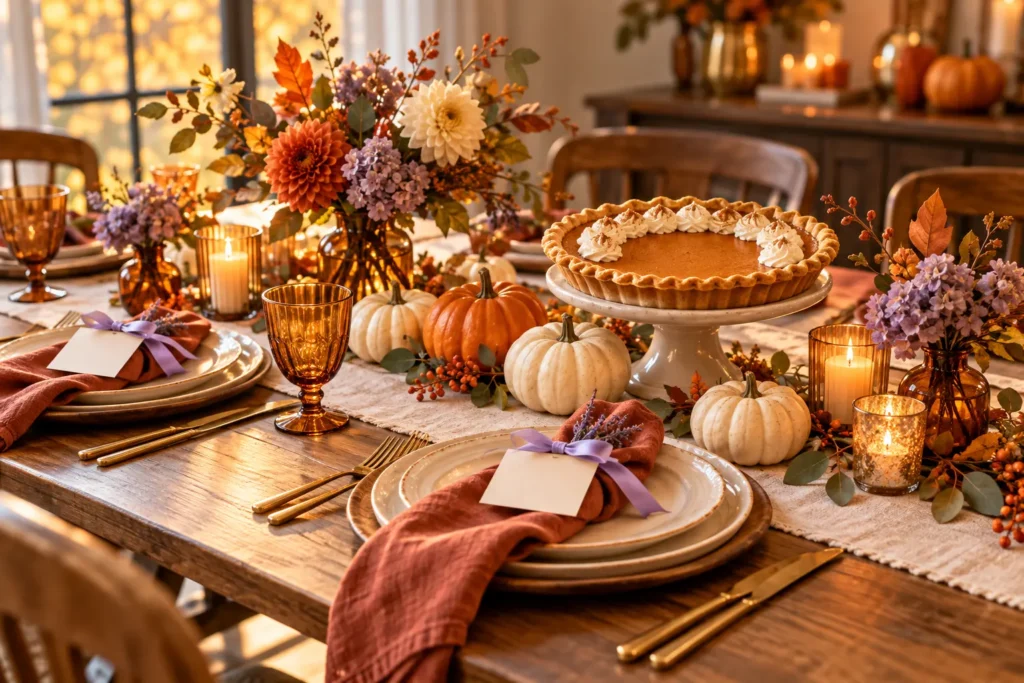
Use a neutral base and add colour through a few small details. Cream with terracotta, sage with warm ivory, or muted lilac with amber can all create a welcoming autumn table. Choose what works with your existing dishes.
- A low centrepiece: group small pumpkins and a small vase on a tray, leaving room for conversation and serving dishes.
- Folded napkins: add a paper name tag or gratitude card instead of buying elaborate napkin rings.
- Soft light: use LED candles near paper crafts and textiles.
- Simple menu cards: list the dishes clearly and ask the cook about ingredients before describing a dish as suitable for a dietary need.
- A separate drinks station: keep cups and drinks together so guests do not need to reach across the dining table.
Browse PNGs and clipart for artwork that fits your palette, or create a simple place card in the editor. Check each design’s licence and image dimensions before printing. Digital artwork is a downloadable file, not a physical decoration shipped to your home.
A practical hosting timeline
- One to two weeks before: confirm guests, dietary needs and the meal format. Send invitations or a clear message with the details.
- Several days before: assign potluck dishes, check serving plates and plan one optional activity.
- The day before: prepare decorations and place cards, arrange seating and set out non-food supplies.
- On the day: leave time to welcome people, explain where things are and enjoy the gathering yourself.
For a very small celebration, skip the full tablescape. A favourite meal, a short call with someone you care about and a handwritten note can make the day meaningful.
Thanksgiving FAQs
When is Thanksgiving in the United States?
It is celebrated on the fourth Thursday in November, so the calendar date changes each year. Check the official holiday calendar when planning invitations or travel.
Is Thanksgiving only about eating turkey?
No. Food is a familiar part of many celebrations, but gathering, gratitude, reflection and helping others can also be part of the day. There is no single menu every household must follow.
What is the difference between Thanksgiving and Friendsgiving?
Thanksgiving is the holiday. Friendsgiving is an informal gathering with friends, often held around the same season. It does not have one fixed date or required set of traditions.
How can I celebrate Thanksgiving on a budget?
Keep the guest list and menu manageable, share dishes by agreement and reuse tableware. A handwritten place card and a small centrepiece can feel personal without a large decorating purchase.
What can children do at Thanksgiving?
Children can decorate paper leaves, draw a thank-you card, help arrange napkins or share something they appreciate. Pair crafts with an accurate, age-appropriate discussion of the holiday’s history.
Choose what matters to your gathering: one welcoming meal, one thoughtful activity and time together. The most useful plan is one you can enjoy as well as organise.