Friendsgiving Potluck Ideas: Easy Food and 4 Planning Steps

The best Friendsgiving potluck ideas are dishes people enjoy sharing, with a little coordination before anyone starts cooking. Choose one main, a filling vegetarian option, a few contrasting sides, dessert and drinks. Then give each guest a clear contribution so your table feels generous without ending up with five pies and no dinner.
This guide brings together easy Friendsgiving food ideas, a sample menu for eight, affordable contributions and four practical planning steps. You do not need a formal dining room or an all-day cooking session to host a warm, memorable evening.
What is a Friendsgiving potluck?
A Friendsgiving potluck is a shared meal with friends, often held around Thanksgiving. The host provides the gathering space, and guests contribute food, drinks or supplies. There is no single required menu: traditional Thanksgiving sides, family favorites and dishes from different cultures can all belong at the same table.
Decide together whether you want a full dinner, a casual buffet or a smaller dessert gathering. That one decision makes every later choice easier, from the invitation wording to the number of serving dishes you need.
Easy Friendsgiving potluck ideas at a glance
| What to bring | Ideas | Planning tip |
|---|---|---|
| A main dish | Roast turkey breast, roast chicken or lentil loaf | Agree on the main before assigning sides. |
| A cozy side | Mashed potatoes, macaroni and cheese or bread stuffing | Check whether oven space is available. |
| Something fresh | Green salad, citrus slaw or roasted green beans | Pack dressings and crunchy toppings separately. |
| A vegetarian centerpiece | Chickpea-stuffed squash or a hearty lentil bake | Include protein so it works as a satisfying main. |
| An easy dessert | Apple crumble, pumpkin pie or brownies | Pre-cut portions when practical. |
| A no-cook contribution | Bakery bread, fruit, sparkling water or packaged snacks | Ask what is still missing before shopping. |
Step 1: Send the invitation and organize a simple sign-up
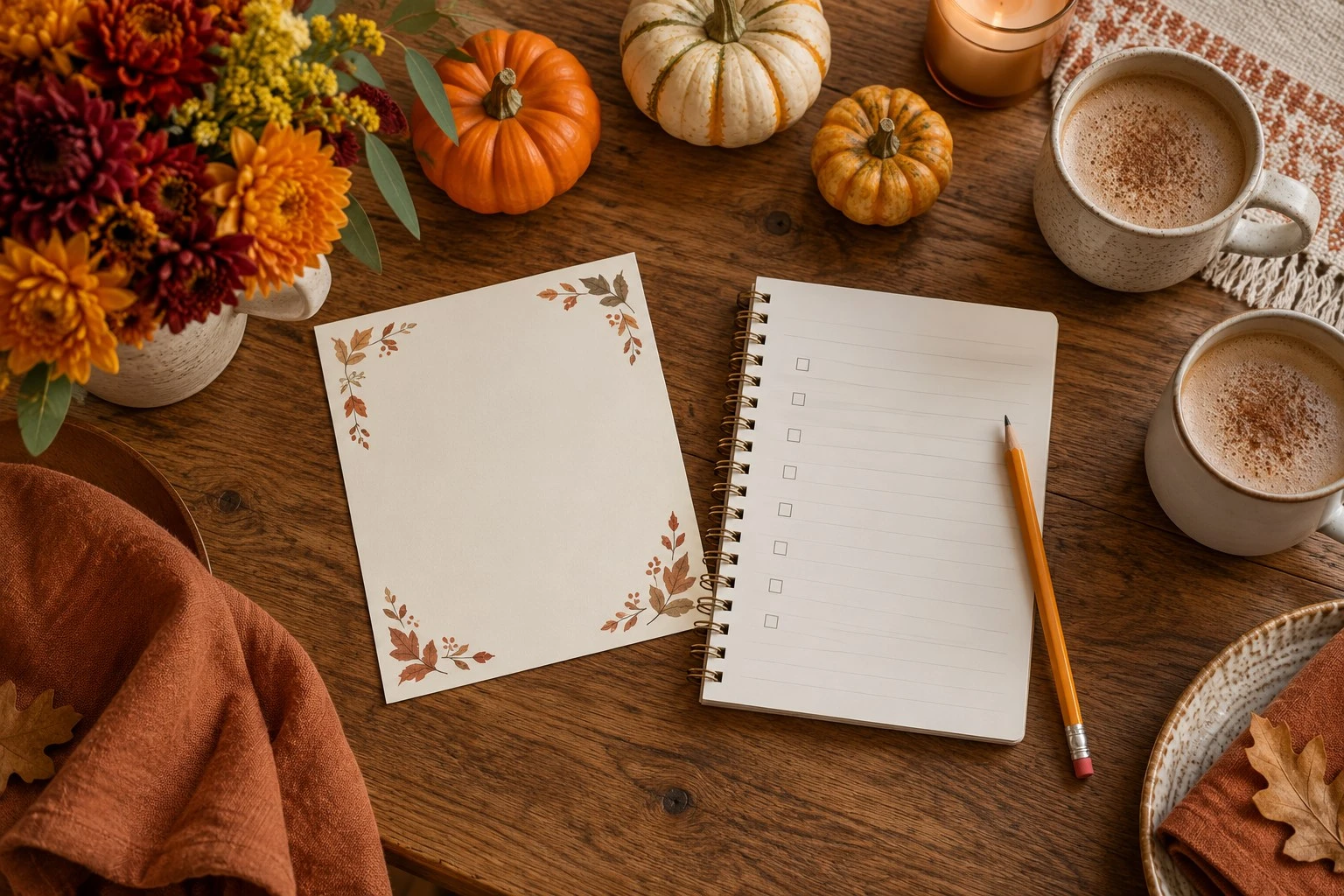
Choose a date, confirm how many people can come and tell everyone when you plan to eat. Arrival time and meal time are not always the same, especially when dishes need finishing. Ask guests to mention dietary requirements privately before you finalize the menu.
Create a shared list with four fields: guest name, dish, approximate servings and reheating needs. Add a separate space for drinks, ice, napkins and containers. Someone who does not enjoy cooking can still make a useful contribution.
Browse Friendsgiving invitation templates to set the mood. For a cozy fall dinner, the burgundy gingham Friendsgiving potluck invitation is a fitting starting point. Include the sign-up link or ask guests to reply with their chosen dish.
Invitation wording: “Join us for Friendsgiving! Bring a favorite dish to share and let us know what you are bringing. Please tell us about dietary needs and whether your dish needs reheating. Good food, good company and a grateful evening together.” Add your date, arrival time, meal time, address and RSVP deadline.
Step 2: Build a balanced Friendsgiving potluck menu
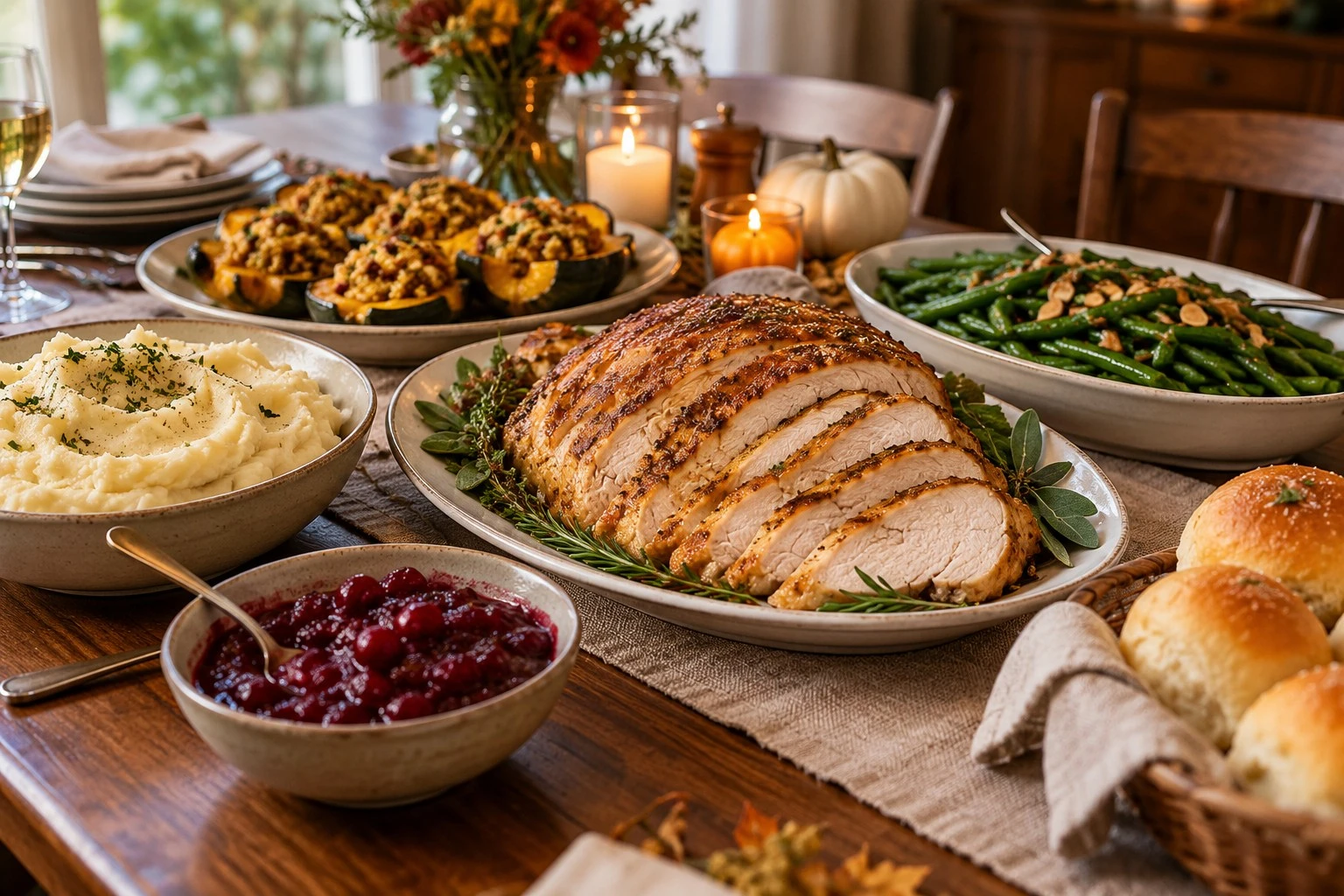
A balanced menu gives guests variety without asking everyone to make something elaborate. Start with the main, then fill gaps. If you already have creamy potatoes and macaroni cheese, a crisp salad or lemony green beans will add more contrast than another rich casserole.
For a group of eight adults, this is a useful starting plan rather than a fixed serving rule. Adjust portions for appetites, children and the recipes you choose.
- Host: one main dish, plus a clear plan for reheating and serving.
- Guest one: a substantial vegetarian dish, such as chickpea-stuffed squash.
- Guest two: a potato, pasta or rice side.
- Guest three: vegetables or a large salad.
- Guest four: bread and cranberry sauce or another condiment.
- Guest five: dessert, with portions agreed in advance.
- Remaining guests: drinks, ice, extra dessert or practical supplies as needed.
Small households can share one contribution, and one guest can take two easy categories. The aim is a complete meal, not identical spending. A smaller group can simplify this to one main, two sides and dessert.
For vegetarian or vegan guests, check ingredients such as stock, butter and cheese instead of assuming a vegetable-based dish suits everyone. Ask guests to keep ingredient information available. When allergies are involved, discuss ingredients and cross-contact directly; a decorative label alone does not establish that food is safe.
Step 3: Choose affordable, easy-to-transport dishes
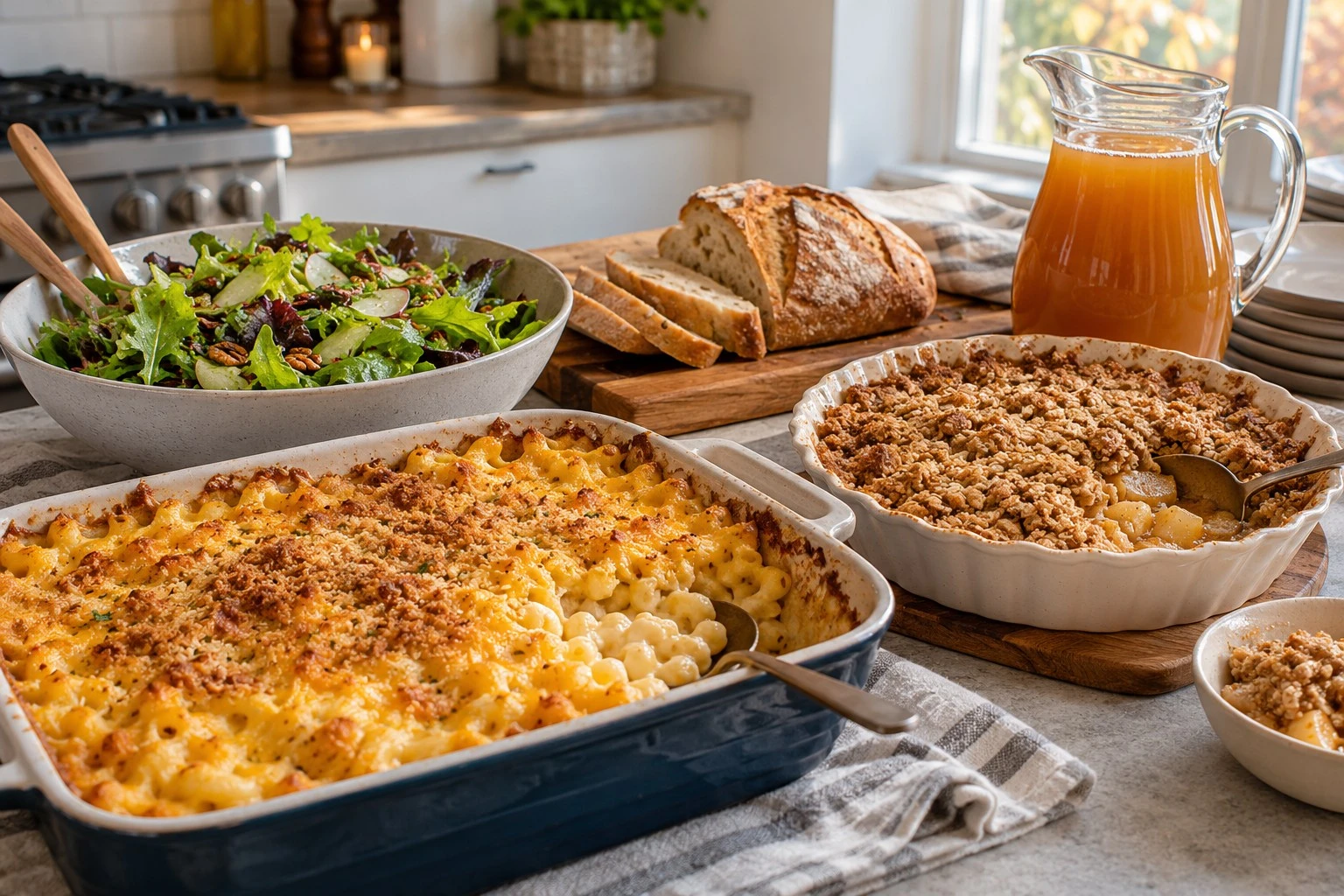
Budget-friendly Friendsgiving ideas start with ingredients you can use efficiently. Pasta, potatoes, lentils, seasonal vegetables and bread can stretch across several portions. Choose a recipe you already know, and confirm the number of servings before buying ingredients.
Comfort food that travels well
Macaroni and cheese, mashed potatoes and stuffing are practical when you have an agreed transport and reheating plan. Use a secure, leak-resistant container and bring the right serving spoon. Do not arrive expecting an empty oven: the host may already be using every shelf.
No-cook Friendsgiving food ideas
A bakery loaf with a suitable spread, a washed fruit platter, packaged crackers or store-bought dessert can be welcome contributions. Keep perishable items chilled during transport. If the food list is complete, bring drinks or supplies instead of another unplanned dish.
Make-ahead tasks that reduce last-minute work
Set out serving dishes, confirm the sign-up list and prepare labels ahead of time. For food preparation, follow the storage and reheating instructions for your specific recipe. Keep salad dressing separate until serving, and carry toppings in their own containers so they retain their texture.
Food-safety reminder: USDA guidance recommends keeping cold food at 40°F (about 4°C) or below and hot food at 140°F (60°C) or above. Discard perishable food left without temperature control for more than two hours, or one hour when temperatures exceed 90°F (about 32°C). Use a cooler with ice packs for cold dishes and refrigerate leftovers promptly in shallow containers. See the USDA food-temperature guidance.
Step 4: Set a welcoming table and keep serving simple
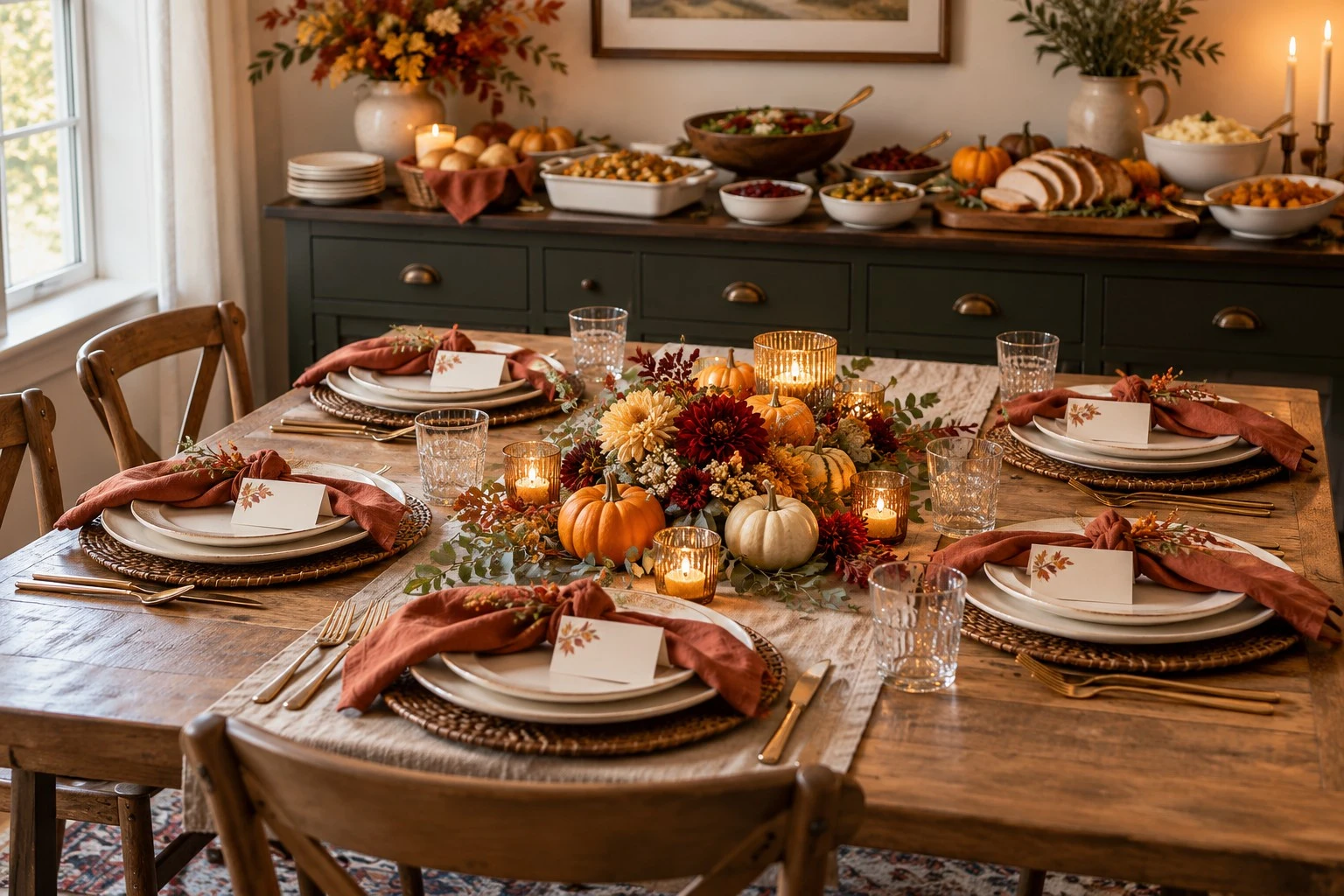
Use a limited color palette, such as cream, rust and muted green. Small pumpkins and simple napkins are enough to create an autumn feel. Keep the center of the table usable, or serve food from a separate counter so everyone can sit comfortably.
For coordinated printable details, explore Thanksgiving PNG designs. A harvest corner PNG can decorate a menu or food label, while an autumn wreath PNG can frame a welcome sign. Check each design’s usage terms, then keep the actual wording large and easy to read.
Place plates at the start of the buffet and give each dish its own utensil. Keep drinks away from the main serving queue. Put ingredient notes beside dishes, and keep the original packaging for purchased food when possible.
Before eating, invite everyone to share one thing they appreciated this year. Keep it optional and brief. Leave a little time after dinner for conversation, a simple game or a relaxed group photograph. A thoughtful celebration does not need a packed activity schedule.
Friendsgiving potluck checklist
- Confirm the guest count, address, arrival time and meal time.
- Assign dishes and supplies; note servings and dietary requirements.
- Check fridge space, reheating arrangements and serving utensils.
- Prepare invitations, food labels and simple table decorations.
- Plan safe transport, buffet temperature control and leftover storage.
- Keep a spare bin bag, clean containers and extra napkins nearby.
Frequently asked questions
What is the easiest dish to bring to Friendsgiving?
Bring something that fits the host’s menu and your schedule. Bakery bread, a simple salad with separate dressing or a purchased dessert can be easy options. Ask what is missing before choosing.
Does Friendsgiving have to include turkey?
No. Roast chicken, a vegetarian bake, stuffed squash or a menu built around your friends’ favorite foods can work. Agree on the style of meal so everyone brings dishes that fit.
How do you avoid duplicate potluck dishes?
Use one shared sign-up list and assign categories before individual recipes. Check it again a few days before the gathering and ask guests to update changes.
What can I bring if I cannot cook?
Offer drinks, ice, bread, dessert, napkins or containers. A useful non-cooking contribution can free the host to focus on the meal.
Choose a manageable menu, give everyone a clear role and make room for the people around the table. Start with your invitation and dish list; the rest of your Friendsgiving can grow from there.
Images are original AI-generated editorial illustrations of the planning and serving ideas; they are not photographs of tested recipes or exact product previews.
← All stories · Explore invitations